GN55 Casino Games: A Hypothetical Case Study in Modern Online Gaming
apkbusiness.com
today
10.2 MB
V1.1.2
Android+IOS
2345+

Description
Introduction
The online casino industry has grown into a multi-billion-dollar global market, attracting entrepreneurs, technologists, and regulators alike. To better understand how a modern brand might position itself within this competitive landscape, this article explores a hypothetical case: “GN55 Casino Games.” By examining its imagined origins, product strategy, regulatory posture, and social implications, readers new to online gambling can gain a balanced, structured understanding of what reputable operators typically consider—and what concerns deserve scrutiny.
Origins and Branding Rationale
In this hypothetical scenario, GN55 emerged from a fictional startup founded by a small team of gaming-industry veterans and software engineers. The name “GN55″ is imagined as a blend of abbreviation and numerology common in the gaming sector—”GN” suggesting “Game Network” or “Good Night” (a playful nod to leisure-time entertainment), while “55” was chosen for its perceived luck and memorability in numerology-conscious markets, particularly across parts of Asia where numerical symbolism plays a meaningful role in consumer branding.
The branding philosophy, as imagined for this case study, centers on accessibility and modernity. Rather than evoking the opulence of traditional Las Vegas-style casinos, GN55’s hypothetical visual identity favors clean, minimalist design—soft gradients, rounded interfaces, and a mobile-first aesthetic intended to feel more like a entertainment app than an intimidating gambling hall. This approach reflects a broader hypothetical industry trend: newer brands often try to de-emphasize the high-stakes, exclusive image of legacy casinos in favor of approachable, casual-friendly experiences.
A fictional tagline often associated with this case study—”Play Smart, Play Fair”—is imagined as central to its marketing, signaling an intended (though not guaranteed) emphasis on transparency and responsible play, themes we’ll revisit later.
Core Product Offerings and Target Audience
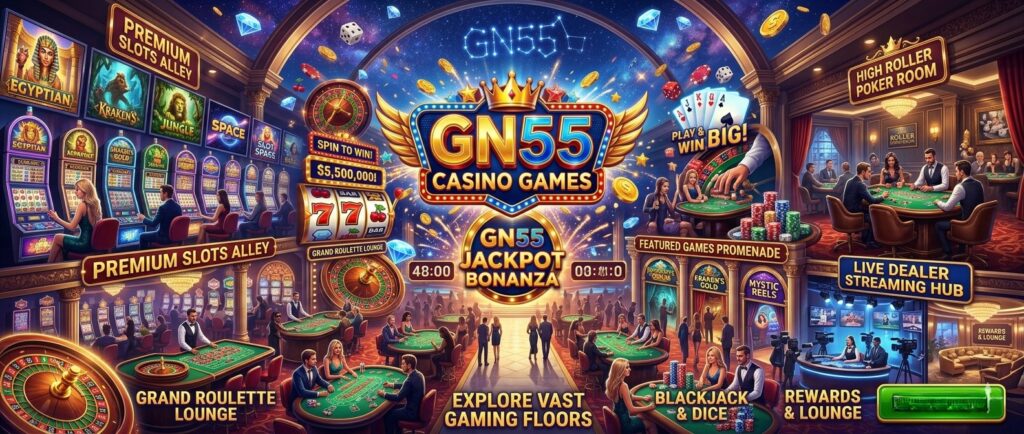
In our hypothetical model, GN55 offers a typical suite of online casino products, which we describe here purely as illustrative examples of what such a platform might include:
Game Categories (Hypothetical):
- Slots: A wide library of digital slot machines, ranging from simple three-reel classics to elaborate video slots with bonus rounds and progressive jackpots.
- Table Games: Digital versions of blackjack, roulette, baccarat, and poker variants.
- Live Dealer Games: Streamed table games hosted by real dealers, designed to simulate an in-person casino experience.
- Specialty Games: Bingo, scratch cards, and crash-style games aimed at casual players seeking quick, low-commitment entertainment.
Platform Structure (Hypothetical): GN55 is imagined to operate via both a web-based platform and a downloadable mobile app, with cross-device account synchronization. This dual approach mirrors a real industry trend in which operators increasingly prioritize seamless mobile experiences, given that a substantial share of online gambling traffic now originates from smartphones.
Promotions (Hypothetical): Typical promotional structures might include welcome bonuses (e.g., deposit matches), free spins, loyalty point systems, and tiered VIP programs. It’s worth noting that such promotions—real or hypothetical—often carry wagering requirements and terms that significantly affect their actual value to players, a point we’ll discuss further under ethical considerations.
Target Audience (Hypothetical): GN55’s imagined audience skews toward adults aged 25–45 who are comfortable with digital transactions and seek casual, on-demand entertainment. The hypothetical marketing strategy would likely emphasize convenience and social proof (leaderboards, community features) rather than the high-roller exclusivity associated with traditional casino marketing.
Regulatory Considerations and Licensing Philosophy
Important clarification: All licensing details below are entirely fictional and constructed for illustrative purposes only.
In this hypothetical scenario, GN55 is imagined to operate under licenses issued by fictional regulatory bodies modeled loosely on real-world frameworks (such as those resembling the Malta Gaming Authority or the UK Gambling Commission, without representing either). A responsible hypothetical operator would typically need to:
- Obtain jurisdiction-specific licenses before offering services in any given country or region, since online gambling legality varies enormously worldwide—from fully regulated markets to outright prohibition.
- Undergo regular independent audits of random number generators (RNGs) to verify game fairness.
- Comply with anti-money laundering (AML) and know-your-customer (KYC) requirements, including identity verification before withdrawals.
- Restrict access in jurisdictions where online gambling is illegal, using geo-blocking and IP verification technology.
A genuinely sound licensing philosophy—again, purely hypothetical in this context—would prioritize operating only in clearly regulated markets rather than relying on offshore licenses with minimal oversight, a practice that real-world consumer advocates have criticized in the broader industry. This is an area where prospective players researching any actual online casino should verify licensing claims independently through official regulator websites rather than taking marketing claims at face value.
Technical and User Experience Aspects
Security (Hypothetical): A modern platform like the imagined GN55 would be expected to implement SSL/TLS encryption for data transmission, two-factor authentication (2FA) for account access, and regular third-party security audits or penetration testing. Real-world best practice in this space generally includes segregating player funds from operational accounts, ensuring that, in theory, customer deposits remain protected even if a company faces financial difficulty.
Payments (Hypothetical): Typical payment infrastructure might include credit/debit cards, e-wallets (PayPal, Skrill, Neteller-style services), bank transfers, and potentially cryptocurrency options, given the growing real-world trend of crypto integration in online gambling. Withdrawal processing times and fee transparency are often cited—by real consumer watchdogs—as key differentiators between trustworthy and predatory platforms, since some operators slow-walk withdrawals or impose hidden fees, a hypothetical concern GN55’s “fair play” branding would need to actively counter through verifiable transparency.
Mobile Access (Hypothetical): Given real industry data showing the majority of online gambling traffic now comes from mobile devices, a competitive hypothetical platform would need responsive design, low-latency live dealer streaming optimized for cellular networks, and possibly biometric login options (fingerprint or facial recognition) for convenience.
User Experience Considerations: Beyond technical features, genuine user experience quality depends on intuitive navigation, clear display of odds and rules, accessible customer support (live chat, multilingual options), and crucially, easily located responsible gambling tools—features that, in the real world, vary widely in quality and prominence across actual operators.
Industry Context: Comparisons and Trends
While GN55 itself is fictional, situating it within real industry dynamics helps illustrate broader patterns:
Market Growth: The global online gambling market has experienced sustained growth over the past decade, driven by smartphone proliferation, payment innovation, and—in many jurisdictions—gradual regulatory liberalization following decades of restriction.
Competitive Landscape: Real-world established operators often differentiate through game variety, live dealer quality, and loyalty programs, while newer entrants frequently compete on user experience, faster payouts, or niche offerings like esports betting or social casino hybrids. A hypothetical brand like GN55 entering this space would face significant competition from operators with greater brand recognition, larger marketing budgets, and established player trust—suggesting that a genuinely new entrant’s hypothetical survival would likely depend on carving out a specific niche (e.g., a particular demographic, region, or game style) rather than competing broadly.
Industry Trends: Real trends shaping this sector include the rise of cryptocurrency payments, increased regulatory scrutiny on advertising (especially regarding minors and vulnerable populations), growing integration of AI for personalization and fraud detection, and expanding “social casino” formats that blur lines between gambling and free-to-play gaming.
Where GN55 Might Fit (Hypothetically): If such a brand existed, its imagined emphasis on minimalist design and transparency-focused branding would position it as a challenger brand targeting younger, mobile-native users rather than competing head-on with legacy casino brands for high-roller clientele.
Ethical Considerations and Responsible Gaming Measures
This is arguably the most important section for readers, regardless of GN55’s fictional status, because the ethical questions surrounding online gambling are very real.
Genuine Industry-Wide Concerns:
- Addiction risk: Online gambling’s accessibility—available 24/7 from a phone—removes many natural friction points (travel, opening hours) that traditionally limited problem gambling behavior.
- Marketing to vulnerable groups: Aggressive bonus marketing, especially targeting young adults or those with limited financial literacy, has drawn real regulatory criticism in multiple countries.
- Bonus terms complexity: Wagering requirements attached to bonuses are frequently structured in ways that are difficult for average consumers to fully understand, raising real transparency concerns across the actual industry.
- Data and AI use: The use of player data to personalize promotions can, in less scrupulous real-world operators, cross into manipulative territory—targeting known problem gamblers with incentives to continue playing.
Hypothetical Responsible Gaming Measures for GN55: A genuinely ethical hypothetical operator would be expected to implement:
- Self-exclusion tools allowing players to lock themselves out for set periods or permanently
- Deposit, loss, and session time limits set by the player
- Reality checks (pop-up reminders of time/money spent)
- Visible links to gambling addiction support resources (e.g., real organizations like the National Council on Problem Gambling in the U.S., or GambleAware in the UK)
- Mandatory age verification and strict prohibition of marketing to anyone under the legal gambling age
It’s worth noting plainly: the mere presence of responsible gambling tools does not guarantee genuine commitment to player welfare, in fiction or reality. Critics of the real-world industry often point out that such tools can function more as regulatory compliance checkboxes than as features operators actively encourage players to use, since heavy engagement directly drives revenue. Any balanced assessment of an actual gambling platform should examine not just whether these tools exist, but how prominently they’re displayed and whether the platform’s design otherwise encourages compulsive engagement (e.g., near-miss effects, autoplay features, or sound design engineered to be rewarding).
Potential Social and Economic Impacts on Players and Communities
Potential Positive Impacts (Hypothetical and General):
- Entertainment value and leisure enjoyment for the majority of players who gamble recreationally and within their means
- Tax revenue generation for jurisdictions with regulated, licensed gambling markets, which can fund public services
- Employment in technology, customer service, compliance, and game development sectors
Potential Negative Impacts (A Real Concern Regardless of GN55’s Fictional Status):
- Financial harm to individuals who develop problem gambling patterns, with downstream effects on families and dependents
- Disproportionate impact on lower-income individuals, who research suggests may be more vulnerable to gambling marketing and more likely to experience severe financial consequences from losses
- Community-level concerns in regions with high gambling advertising saturation, including normalization effects on younger audiences exposed to gambling-adjacent content (e.g., loot boxes in video games, sports betting advertising during broadcasts)
A genuinely balanced hypothetical brand would need to grapple honestly with the tension between profitability (which generally correlates with player engagement and spending) and player welfare (which sometimes requires actively discouraging excessive play)—a tension that exists for every real operator in this space, not just our fictional example.
Concluding Synthesis: GN55’s Horizon and Sustainability
As a hypothetical case study, GN55 Casino Games illustrates the multifaceted considerations any online casino brand—real or imagined—must navigate: building trust through licensing and security, competing in a crowded market through differentiated user experience, and confronting genuine ethical obligations around responsible gambling.
For a brand like GN55 to be sustainable in any realistic sense, it would need more than appealing branding or competitive bonuses. Long-term viability in this sector typically depends on regulatory compliance that goes beyond minimum requirements, transparent communication about odds and terms, and a genuine (not merely cosmetic) investment in player protection. Brands that treat responsible gambling as a core value rather than a legal obligation tend to build more durable trust with both regulators and players—though even this is not a guarantee against the broader societal harms associated with gambling expansion.
For readers new to online casinos—whether evaluating a brand like the fictional GN55 or any real platform—the key takeaways remain consistent: verify licensing independently, read bonus terms carefully, understand that the platform’s financial interests are not always aligned with your own, and treat self-exclusion and limit-setting tools as genuinely useful safeguards rather than admissions of failure. The future of online gambling will likely continue to be shaped by the ongoing negotiation between commercial incentives and consumer protection—a dynamic that any brand, fictional or real, must ultimately answer to.
you can also play this game for more earning money www.bn55.com